Introduction to Total Knee Replacement
RKZ Surabaya Medical Tourism
Total Knee Replacement for Better Mobility
An integrated knee replacement pathway combining orthopaedic care, structured pain management, early mobilisation, rehabilitation, and dedicated Medical Tourism assistance.
- Orthopaedic assessment and personalised surgical planning
- Enhanced recovery and early mobilisation approach
- Coordinated support before arrival, during treatment, and after discharge
Understanding the Procedure
A Comprehensive Solution for Advanced Knee Joint Damage
Chronic knee pain caused by osteoarthritis, previous injury, joint degeneration, or certain medical conditions can make everyday activities increasingly difficult. Walking, climbing stairs, standing from a seated position, and maintaining independence may become painful or limited.
When medication, physiotherapy, injections, activity modification, and other non-surgical treatments no longer provide sufficient relief, Total Knee Replacement may be considered after evaluation by an orthopaedic specialist.
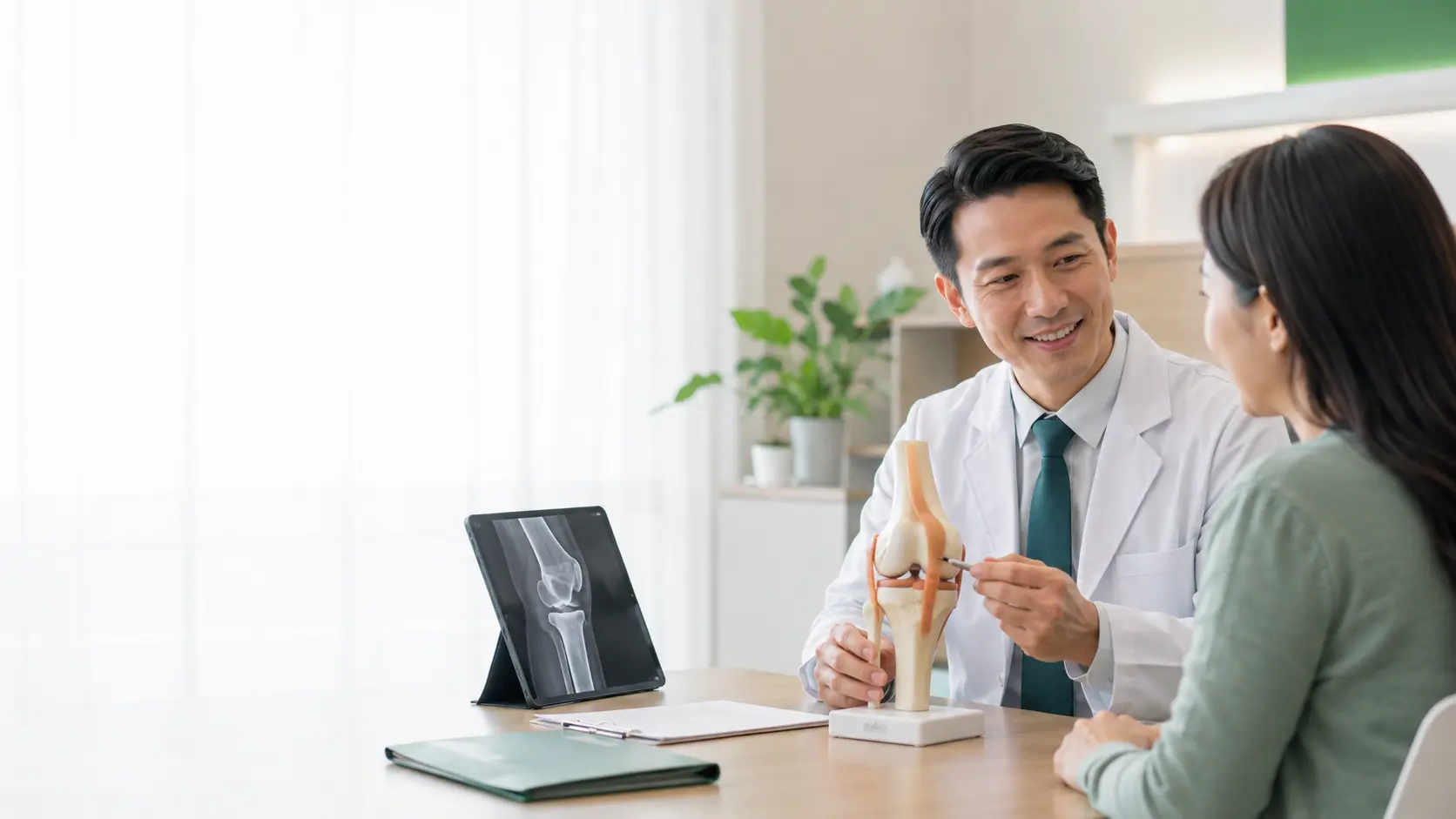
During Total Knee Replacement, damaged surfaces of the knee joint are removed and replaced with prosthetic components. Surgical planning takes into account the patient’s anatomy, bone condition, joint alignment, mobility needs, and overall health.
At RKZ Surabaya, the treatment journey extends beyond the surgical procedure. Pre-operative education, anaesthesia assessment, pain management, nursing care, early mobilisation, rehabilitation, family guidance, and follow-up planning are coordinated as part of an integrated pathway.
The goal is to support pain reduction, improve knee function, restore mobility, and help patients return to meaningful daily activities according to their individual recovery progress.
Mobility-Focused Care
Enhanced Recovery
Integrated Team
Patient Assistance
What the Integrated Pathway Includes
- Orthopaedic consultation and imaging review
- Pre-operative screening and risk assessment
- Patient and family preparation
- Total Knee Replacement procedure
- Early movement and rehabilitation
- Discharge and follow-up guidance
Treatment eligibility, recovery milestones, and length of
hospital stay depend on individual clinical assessment.
Integrated Treatment
Key Features of Total Knee Replacement Care at RKZ
Improved Mobility
Treatment is designed to help reduce movement limitations caused by advanced knee joint damage.
Structured Pain Management
Multimodal pain management supports comfort during surgery and the early recovery period.
Early Mobilisation
Patients may begin guided movement and walking exercises according to their clinical condition.
Integrated Medical Team
Orthopaedic, anaesthesia, nursing, rehabilitation, and supporting teams coordinate the treatment journey.
Personalised Treatment Planning
The surgical approach, implant selection, and rehabilitation plan are based on individual assessment.
Patient and Family Education
Patients and families receive guidance before surgery, during admission, and before returning home.
Clinical Assessment Required
Who May Benefit from Total Knee Replacement?
Persistent Knee Pain
Knee pain continues during walking, climbing stairs, standing up, or performing everyday activities.
Limited Movement
The knee becomes stiff, difficult to straighten, or increasingly limits independence and mobility.
Non-Surgical Treatment Is No Longer Effective
Medication, physiotherapy, injections, or other conservative treatments no longer provide adequate relief.
Advanced Joint Damage
Clinical examination and imaging show significant joint damage that may require surgical treatment.
Knee Deformity
Changes in knee alignment may affect walking patterns and place additional pressure on other joints.
Medically Suitable for Surgery
The orthopaedic and multidisciplinary teams confirm that the patient is appropriately prepared for surgery.
The decision to proceed with surgery is made after consultation,
examination, imaging review, and assessment of the patient’s
general health and treatment goals.
Coordinated Pathway
Your Total Knee Replacement Journey
1
Initial Consultation
The orthopaedic specialist reviews symptoms, mobility limitations, medical history, and previous treatment.
2
Diagnostic Assessment
Physical examination and imaging are reviewed to evaluate joint damage and confirm the treatment indication.
3
Treatment Discussion
The doctor explains available treatment options, expected benefits, potential risks, and the proposed surgical plan.
4
Pre-Operative Screening
Laboratory testing, cardiovascular assessment, anaesthesia evaluation, and management of existing health conditions are arranged.
5
Total Knee Replacement
Damaged knee joint surfaces are replaced with appropriate prosthetic components based on the patient’s clinical needs.
6
Early Recovery and Rehabilitation
Pain control, movement exercises, and assisted walking begin according to the patient’s postoperative condition.
7
Discharge and Follow-Up
Patients receive wound-care instructions, medication guidance, exercise recommendations, and a follow-up schedule.
Recovery Support
Supporting Recovery After Knee Replacement
Recovery milestones are individual and depend on the patient’s health, surgical outcome, mobility, and participation in rehabilitation.
Multimodal Pain Control
Different pain-management methods may be combined to support comfort and participation in rehabilitation.
Walking Practice
The rehabilitation team guides standing and walking with appropriate assistance or mobility devices.
Range-of-Motion Exercise
Progressive exercises support knee movement, muscle strength, and functional recovery.
Home Preparation
Patients and families receive advice on making the home environment safer during the recovery period.
Scheduled Follow-Up
Follow-up appointments help the medical team evaluate the wound, knee function, and recovery progress.
Remote Follow-Up When Appropriate
Teleconsultation may be considered for selected follow-up needs, subject to clinical suitability.
Patient Education
Total Knee Replacement Educational Videos
These short videos provide an overview of the service, inpatient care, early mobilisation, rehabilitation, and communication from the RKZ orthopaedic team.
Patient Experience and Education
Inpatient Care and Early Mobilisation
The Role of Rehabilitation After Surgery
Message from the Orthopaedic Team
Medical Tourism Support
Plan Your Knee Replacement Journey with RKZ
How Our Medical Tourism Team Can Assist
Our representative can help patients and families coordinate essential information before travelling to RKZ Surabaya.
- Initial service information
- Orthopaedic appointment coordination
- Guidance on medical documents
- Pre-arrival communication
- Hospital access information
- Treatment schedule coordination
- Family and patient guidance
- Follow-up communication
Estimated treatment costs, implant options, admission
schedule, and length of stay can only be confirmed after
clinical assessment and service availability review.
Medical Tourism Representative
CHA – Vidya
Contact our representative to discuss your condition, preferred schedule, available medical documents, and travel plan.
RKZ Surabaya Medical Tourism
Take the Next Step Toward Better Mobility
Contact our Medical Tourism representative to arrange an orthopaedic consultation and receive guidance for your Total Knee Replacement treatment journey.
Treatment recommendations and recovery expectations vary
according to the patient’s medical condition and specialist
assessment.
Patient Information
Frequently Asked Questions
What is Total Knee Replacement?
Total Knee Replacement is a surgical procedure that replaces damaged surfaces of the knee joint with prosthetic components. The procedure is considered after clinical assessment and when non-surgical treatment no longer provides adequate relief.
How long can a knee implant last?
Many knee implants may function for 15 to 20 years or longer. Implant longevity varies according to the patient’s health, bone condition, body weight, activity level, implant type, and adherence to medical recommendations.
When can I start walking after surgery?
Some patients may begin standing or walking with assistance on the day of surgery or the following day. The timing depends on clinical stability and evaluation by the orthopaedic and rehabilitation teams.
Will the procedure be painful?
Postoperative discomfort can occur, but the medical team uses pain-management strategies to support comfort and allow patients to participate in early movement and rehabilitation.
How long will I stay in the hospital?
The length of hospital stay depends on the patient’s condition, mobility, medical history, postoperative progress, and support available after discharge.
Can patients with diabetes or hypertension undergo knee replacement?
Patients with diabetes, hypertension, or other medical conditions may still be considered for surgery. These conditions must first be assessed and optimised by the multidisciplinary team.
Can RKZ assist patients travelling from outside Surabaya?
Yes. The RKZ Medical Tourism representative can assist with appointment coordination, pre-arrival information, hospital access guidance, and communication related to the treatment journey.