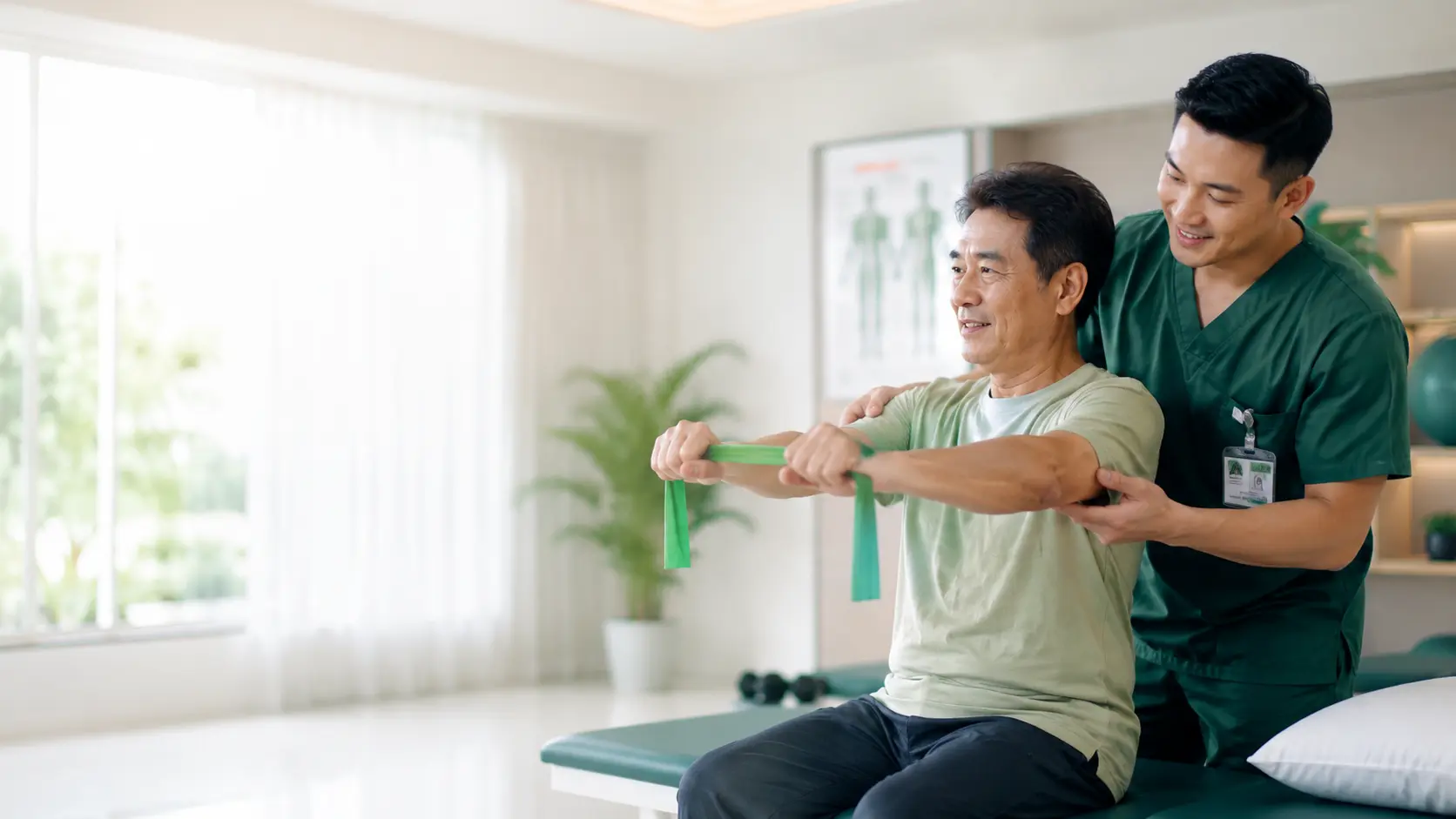
Stroke Recovery Program Reconnecting Function and Independence
A multidisciplinary neurorestoration and rehabilitation pathway designed to support movement, communication, cognition, swallowing, and daily independence after stroke.
- Neuroplasticity-based and goal-oriented recovery planning
- Integrated medical, functional, communication, and cognitive rehabilitation
- Dedicated Medical Tourism assistance before arrival, during care, and after discharge
Recovery Continues Beyond Acute Stroke Treatment
Emergency and acute hospital treatment are essential first steps after stroke. However, many patients continue to face weakness, balance problems, speech changes, swallowing difficulties, cognitive changes, pain, stiffness, and reduced independence after the acute phase.
The Stroke Recovery Program at RKZ Surabaya focuses on the restoration and rehabilitation phase. It uses an individual, multidisciplinary approach to help patients practise meaningful activities, relearn skills, and build safer strategies for everyday life.
The program is guided by the principle of neuroplasticity—the nervous system’s ability to adapt and reorganise. Repetitive, purposeful, and progressively challenging activities may help the brain create new ways to support movement, communication, cognition, and daily function.
Recovery is a shared journey. Medical specialists design and monitor the program, therapists guide functional practice, patients actively participate, and families or caregivers help maintain continuity and safety at home.
Recovery Is More Than Regaining Movement
The program also considers communication, swallowing, cognition, emotional wellbeing, caregiver readiness, and participation in everyday life.
Recovery Needs We May Address
Mobility and Balance
Difficulty standing, walking, transferring, maintaining balance, or using an affected arm or leg.
Speech and Communication
Difficulty speaking, understanding language, expressing needs, or communicating clearly after stroke.
Swallowing Function
Problems with eating, drinking, chewing, or swallowing that require structured assessment and therapy.
Cognition and Attention
Changes in concentration, memory, planning, problem-solving, awareness, or processing information.
Muscle Tone and Control
Weakness, stiffness, spasticity, reduced coordination, pain, or abnormal movement patterns.
Daily Independence
Difficulty dressing, bathing, eating, using the toilet, preparing meals, or returning to daily routines.
Why Choose RKZ Surabaya for Stroke Recovery?
Neurorestoration-Focused Care
A recovery program designed to support the relearning and reorganisation of neurological functions through neuroplasticity-based rehabilitation.
Multidisciplinary Team
Neurology, rehabilitation medicine, physiotherapy, speech therapy, occupational therapy, nursing, nutrition, and other disciplines work together.
Individual Recovery Plan
Goals, therapy intensity, and follow-up are tailored to the patient’s condition, abilities, priorities, and recovery stage.
Comprehensive Rehabilitation
The program may combine physical, communication, cognitive, functional, and supportive interventions according to clinical needs.
Flexible Care Options
Selected patients may receive coordinated telecare or homecare support when clinically appropriate and available.
Progress Monitoring
Functional progress is reviewed regularly so that the recovery plan can be adjusted over time.
Neurorestoration and Rehabilitation Modalities
Not every modality is required for every patient. Selection is based on specialist assessment, safety, goals, and expected benefit.
Transcranial Magnetic Stimulation (TMS)
A non-invasive magnetic stimulation option that may be considered to support selected motor, language, or neurofunctional recovery goals after specialist assessment.
Peripheral Magnetic Stimulation (PMS)
Magnetic stimulation directed toward peripheral nerves and muscles to support selected movement, activation, and muscle-tone goals.
Quantitative Electroencephalography (QEEG)
Digital mapping of brain electrical activity that may support neurological assessment and treatment planning when clinically indicated.
Neuromuscular Taping
Specialised elastic taping techniques that may support movement patterns, muscle stability, positioning, and pain management.
Dry Needling or Acupuncture
Needle-based interventions that may be used for selected muscle tension, pain, stiffness, and functional rehabilitation goals.
Integrated Medical Rehabilitation
A coordinated program that may include robotic rehabilitation, physiotherapy, speech therapy, occupational therapy, and hydrotherapy.
A Multidisciplinary Stroke Recovery Team
Neurologist and Neurorestoration Specialist
Neurological assessment, medical management, recovery planning, and monitoring of nervous-system conditions.
Physical and Rehabilitation Medicine Physician
Functional assessment, rehabilitation prescription, therapy coordination, and progress evaluation.
Physiotherapist
Mobility, balance, strength, endurance, posture, transfers, and walking practice.
Speech and Language Therapist
Speech, language, voice, communication, cognitive-communication, and swallowing rehabilitation.
Occupational Therapist
Daily activities, upper-limb function, cognition, adaptive techniques, and home independence.
Hydrotherapy Team
Water-based movement and mobility training for selected patients and rehabilitation goals.
Pharmacist
Medication review, education, adherence support, and coordination of medication-related needs.
Clinical Nutrition Team
Nutritional assessment and dietary planning to support recovery, strength, and medical needs.
Mental Health Professional
Emotional adjustment, psychological support, mood monitoring, and support for patients and families.
Your Stroke Recovery Journey with RKZ
Medical Tourism Contact
Share the patient’s condition, preferred schedule, current symptoms, and available medical records with our representative.
Neurological and Functional Assessment
The medical team evaluates neurological status, mobility, communication, cognition, daily function, and recovery priorities.
Individual Recovery Plan
A personalised program is prepared based on clinical findings, functional goals, therapy tolerance, and family support.
Integrated Therapy Program
Selected medical, neurostimulation, physical, communication, cognitive, and functional therapies are delivered in a coordinated pathway.
Progress Review
The team monitors response, barriers, safety, and functional change, then adjusts the rehabilitation plan when needed.
Family and Caregiver Training
Caregivers receive practical guidance on positioning, transfers, exercises, communication, safety, and daily support.
Follow-Up and Continuity of Care
The next phase may include outpatient rehabilitation, telecare, homecare, or scheduled specialist follow-up as appropriate.
Why Early Rehabilitation Matters
Rehabilitation should begin when the patient is medically stable and the treating team confirms that therapy is safe. Timely positioning, movement, communication support, swallowing care, functional practice, and caregiver education may help reduce avoidable decline and support better participation in recovery.
Safety Comes First
Rehabilitation intensity is adjusted to medical stability, fatigue, neurological status, and the patient’s ability to participate safely.
Respiratory Complications
Reduced mobility and swallowing problems may increase respiratory risks, requiring preventive care and monitoring.
Pressure Injuries
Positioning, skin care, mobility, and caregiver education help reduce prolonged pressure on vulnerable areas.
Muscle Loss and Deconditioning
Prolonged inactivity can reduce strength, endurance, and confidence in performing everyday activities.
Mood and Emotional Difficulties
Stroke recovery may affect mood, motivation, adjustment, and family wellbeing, making emotional support important.
Joint Stiffness and Contracture
Positioning, movement, splinting, exercise, and timely therapy help manage the risk of fixed stiffness.
Urinary and General Medical Complications
Mobility, hydration, bladder care, medication review, and medical monitoring support complication prevention.
Plan Your Stroke Recovery Journey with RKZ
How Our Medical Tourism Team Can Assist
Our representative can help patients and families coordinate essential information before travelling to RKZ Surabaya.
- Initial service information
- Neurology and rehabilitation appointment coordination
- Guidance on medical records and previous test results
- Pre-arrival communication
- Hospital access and schedule information
- Patient and caregiver guidance
- Treatment journey coordination
- Follow-up communication
CHA – Vidya
Contact our representative to discuss the patient’s condition, preferred schedule, available medical documents, and travel plan.
Begin the Next Phase of Stroke Recovery with Confidence
Contact our Medical Tourism representative to arrange an initial consultation and receive guidance for a coordinated Stroke Recovery Program at RKZ Surabaya.